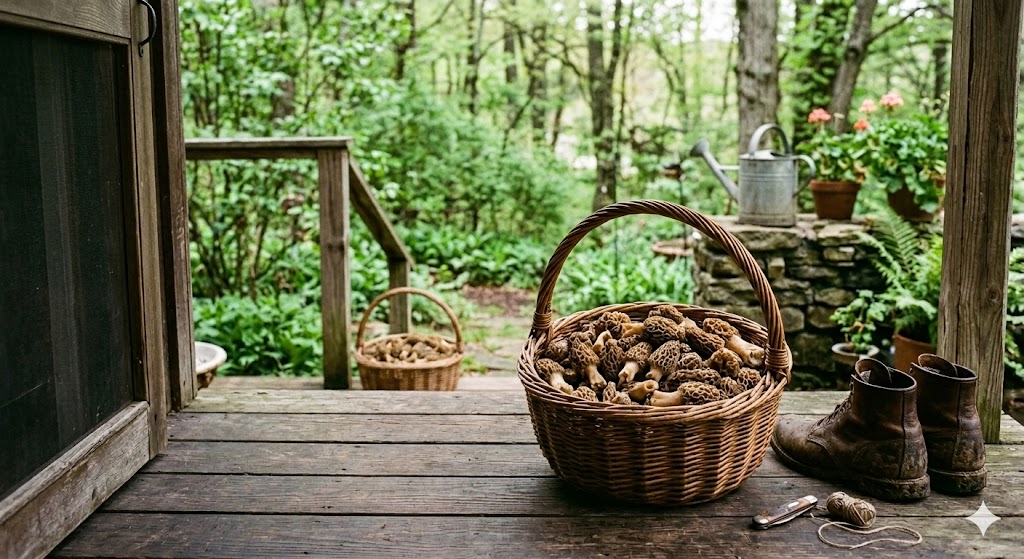
Spring in Vermont brings a familiar itch. When the ground thaws, the apple orchards wake up, and the fiddleheads start to unfurl, my eyes are permanently glued to the forest floor. Finding a morel—that elusive, brain-like beauty hiding in the leaf litter—is a thrill that never gets old. But occasionally, the woods are incredibly generous, and you find yourself staring at an absolute motherlode.
More Than Just a Mushroom
When you've hit the jackpot and your bag is heavy, what comes next? You can only eat so many butter-fried mushrooms in one sitting. In many parts of the country, and especially here in New England, morels are a true delicacy meant to be shared. You don't just hoard them; you divide them among family, close friends, and the people who matter. It's an unspoken currency of care.
But my absolute favorite destination for an unexpected bumper crop? The older folks in my neighborhood.
A Taste That Travels Through Time
There is a profound magic in food, an uncanny ability to transport us backward through time. For many of our elderly neighbors, their days of bushwhacking up steep ravines and scrambling over dead ash trees are firmly in the past. But their memories of spring foraging are still beautifully vibrant.
I remember dropping off a paper bag of fresh blondes and blacks to a neighbor in her late eighties. When she saw them, her eyes completely lit up. Just the earthy, rich smell of those wild mushrooms brought a flood of stories tumbling out—tales of foraging with her grandfather in the 1940s, cooking them in a massive cast-iron skillet on a wood stove, and the secret patches she used to guard with her life. That simple gift gave her a taste of her youth, and in return, I was gifted with a beautiful piece of local history.
🍄 Forager's Gear Spotlight
A traditional woven basket or breathable mesh bag keeps your delicate morels intact and spreads their spores as you walk back to your neighborhood.
Shop Recommended Foraging Gear on eBayWe may earn a small commission from affiliate links.
Building Community Through the Harvest
As foragers, we talk constantly about respecting the woods. We practice sustainable harvesting, leaving enough behind to ensure the mycelial network thrives for seasons to come. But respecting the harvest also means honoring the community around us.
Sharing your bounty is the ultimate expression of that respect. It bridges generational gaps and reminds us that we are part of an ecosystem, both natural and human. So, the next time you find yourself with a heavy harvest and a full heart, look next door. A simple morel might just be the highlight of their spring—and sharing it will certainly be the highlight of yours.